
1000 Words on: Self-Acceptance
An exploration of self-acceptance as the balance between willpower and surrender, opening the doorway to inner peace, clarity, and the freedom to become who we are meant to be.
Douglas Holwerda
3 min read
A short prayer offered by Reinhold Niebuhr has stood the test of time, having become the motto of Alcoholics Anonymous. I would like to expand on it here, as I believe it contains the key ingredients necessary for understanding self-acceptance. God grant me the serenity to accept the things I cannot change (by the use of my will), the strength or courage to change the things I can (by the use of my will), and the wisdom to know the difference (when it is acceptance or willpower that creates change).
Change is a constant.
The question is, “How do we find peace with the changes of life?”
Here, I propose that self-acceptance is a good place to begin, not only to free ourselves to live the life that is ours, but also to free humankind to discover the potential we have yet to know.
Carl Jung wrote, “Like a plant which from a seed becomes an oak tree, so humans become what we are meant to be… but we get stuck.”
Our potential becomes thwarted; we become less than we could be. William James said it this way: “Compared to what we ought to be, we are only half awake… the human individual thus lives usually far within his limits.” He called it “the habit of inferiority to our full self.”
Self-acceptance is both a foundation upon which we stand secure in ourselves and a doorway that opens the freedom to be our truest selves, what we have the potential to become.
Let’s start by dispelling a notion. Many believe acceptance is a form of “giving up.”
They say acceptance means failing to be motivated, to work toward a goal, to persist or show determination, tenacity, or grit.
They say accepting things is weak, helpless, unable to be ambitious or to change things in the ways we desire. They claim that if we want change, willpower, determination, strategy, and grit are what overcome whatever stands in the way. This Western way of thinking includes competition and the drive for mastery of the world around us.
But this way of thinking sees only half of the whole.
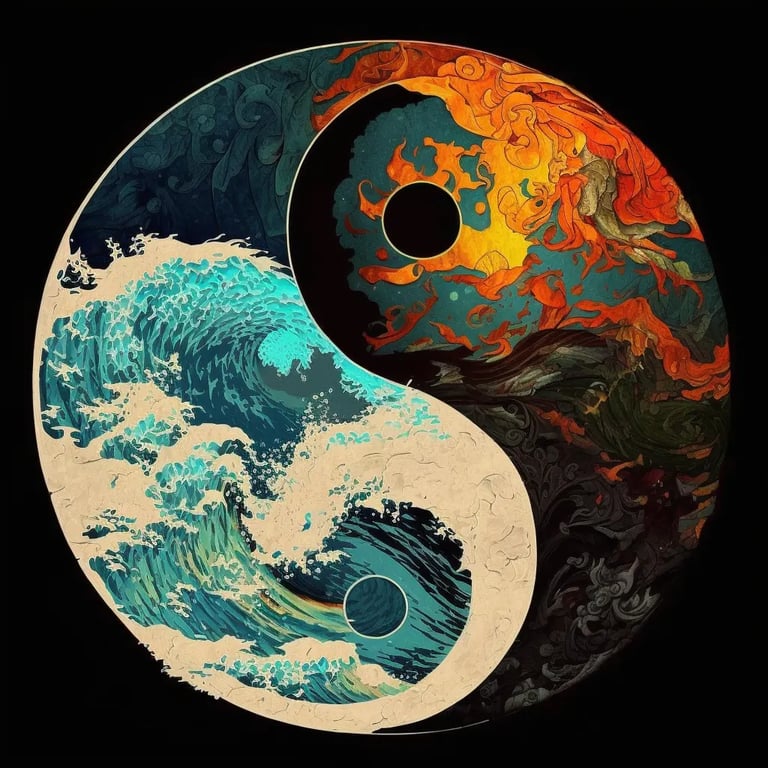
Willpower, when coupled with acceptance much like the duality of the Yin/Yang symbol creates not only change, but also serenity. Willpower has certainly generated discovery, innovation, development, and sophistication in our societies. But willpower has also been fueled by greed, dominance, status, and systems that benefit some at the expense of the whole at the expense of serenity. Willpower alone does not understand the message of frustration or the importance of knowing limitation.
Those who depend solely on willpower push and force, trying to overcome frustration, anxiety, guilt, fear fueled by anger or a need for control. They rationalize it as ambition. And when outcomes are not reached, they believe they have failed seeing it only as a failure of willpower.
Discovering the counterpoint to willpower, acceptance is a place of liberation.
What better change could we ask for than feeling more inner peace as we move through life’s challenges and aspirations?
Ironically, acceptance does not make us weak. It makes us clearer about what is within our control and more realistic about how change occurs. When we remove frustration and the judgments that tell us we have failed when guilt, shame, fear, and anger give way to acceptance, we regain mobility. We flow with life rather than push against it.
Limits guide us, shaping a life more peaceful and aligned with what is beyond our control.
Those addicted to willpower may ask, “Do we accomplish as much?” The answer: We accomplish more of what is needed.
When we understand the ways we devalue ourselves, our self-worth, our esteem, we begin to see why we get stuck and become only a portion of who we could be. We attach expectations to unrealistic standards, goals, and ideals, judging ourselves based on willpower. This internal system generates chronic self-judgment, perfectionism, superiority, inferiority, and ultimately a distortion of reality.
Acceptance includes understanding that the human experience begins with innocence.
We inherit a reality at birth. We depend on others but have a life of our own. As we grow, we develop partly through the world around us. When our childhood needs are met, we are more likely to feel secure, understand limits and freedoms, feel belonging, know ourselves, and discover how life works through play.
If fortunate, we become adults with a sense of self-worth and awareness of a larger picture: that life is lived through people and nature, that we shape life, and that we can align with it rather than dominate it.
Self-acceptance brings the OK-ness of serenity.